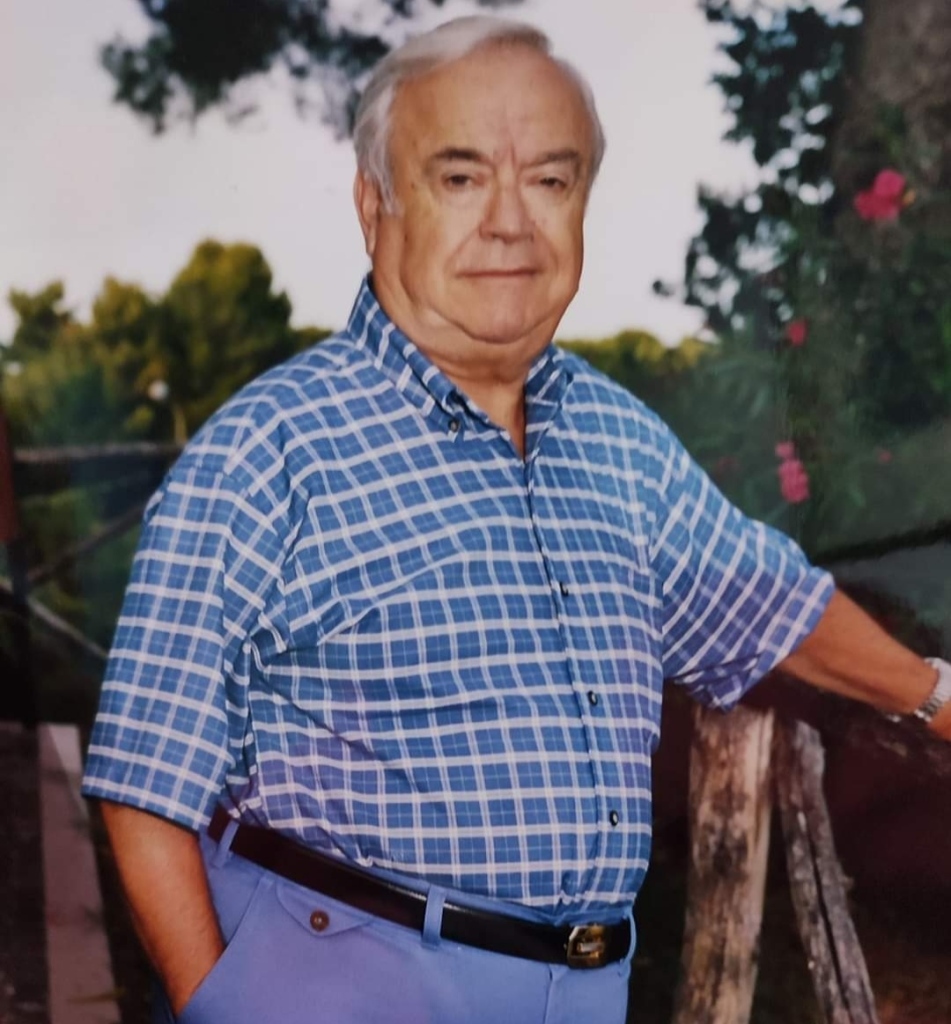
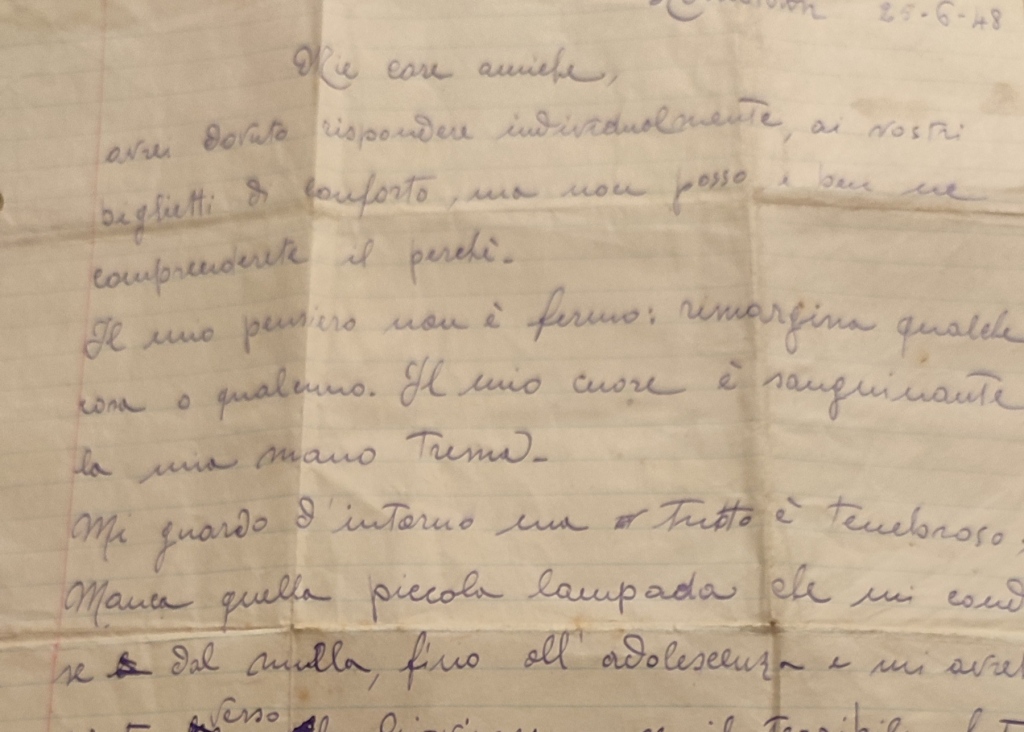
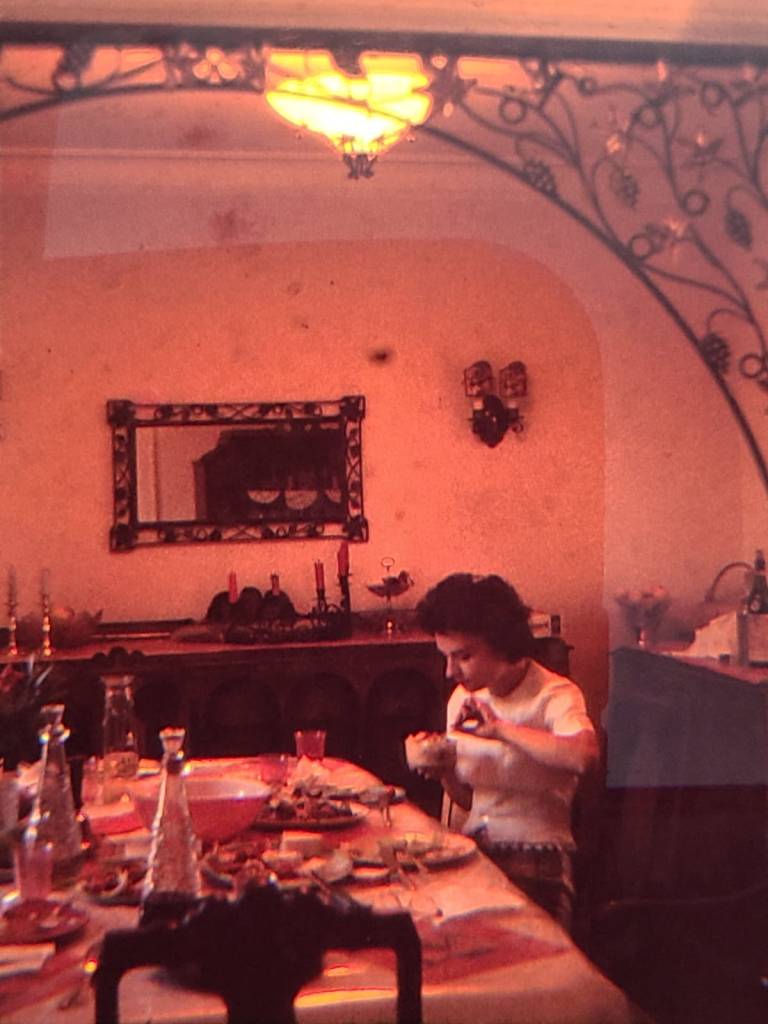
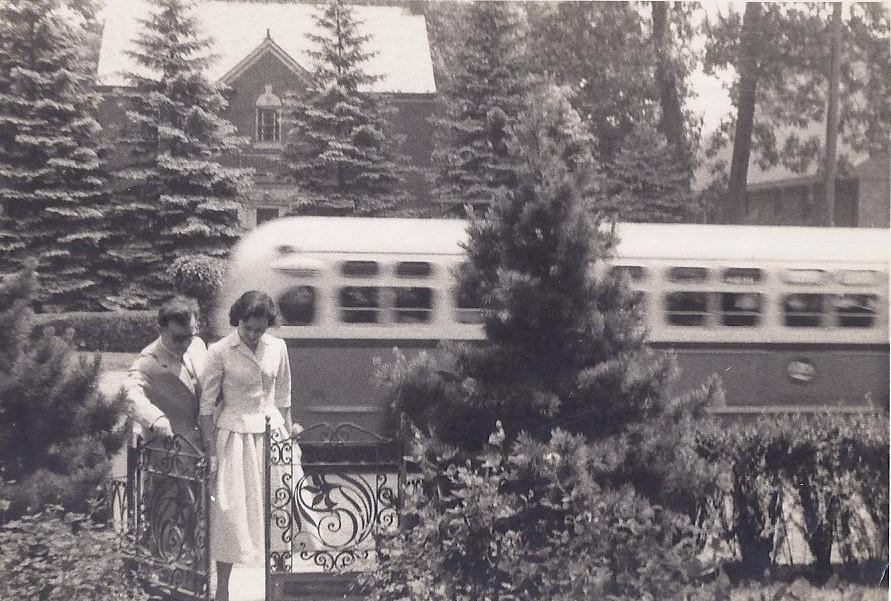
In the midst of all the turmoil and horrors happening on my native soil, we are witnessing arrests of migrants without due process. These migrants are in most cases in the same position as our forebears just 70-80 years ago. I need to speak out and remind our beloved Italian-Americans-including my extended family of two things: First of all, sometimes, powers stronger than your “free will” or your “desires” or “dreams” force you and your family to give up on life in your homeland, and you find yourself removed from the life you once knew. Second, more often than not, it’s very easy to choose to be on the wrong side of history. We all need to remember where our families came from and what they went through. I hope this post in which I quote verbatim my father’s book “Suffer the Children: Growing up in Italy during World War II” will help everyone reflect on the state of humanity right now. Hopefully it will encourage many to do some serious soul searching.
The US is a nation built on the sacrifices of immigrants from all over the world, and most of us have been on this soil for slightly less than 100 years. I hear people talk about “legals” and “illegals”, but I don’t think they realize that if they dig a little deeper, they’ll find that there is a huge gray area between those two concepts, and “legality” sometimes is paper thin. If you look deep enough, you will probably find more than one ancestor who gave you your birthright by overstaying their visa. And, let us Italian Americans never forget that Anti-Italianism was a thing! I believe we need to show a bit of compassion for folks who arrived more recently, and who are currently under attack by the very government of the country in which they sought refuge, just like we did many years ago.
A little bit of family history here…I bet many of my beloved Sorginis will be very surprised to learn their great, or great great grandfather was a “SOCIALIST” LOL.
The Sorginis
If Nonno Donato (De Simone)’s personality, though pleasant, lacked the fiery spark I would have expected in such a revered personage, Nonno Filippo Sorgini’s personality more than made up for it. He, too, was tall, handsome in a rugged way, and a respected man in town. Unlike Nonno De Simone, however, Nonno Sorgini was a man of quick decisions. Unfortunately, he was a rover. Nonna Concetta, his wife (grandmother Concetta), who didn’t mince words in describing him, used to quip: “He has pepper up his ass!” He was never happy in one place for too long at a time.
Nonno Filippo’s most unusual characteristic was his love of politics. He fought in World War I in the Italian Army as an artillery corporal major. He was already forty years old, then, but he was needed because he was considered “educated,” having completed the third grade. After the war, he got into politics and became an activist in Filippo Turati’s Italian Socialist Party, the same party Benito Mussolini adhered to. At war’s end, however, that party underwent a triple split. One group stayed with Turati, while another drifted to the right and followed Mussolini as he founded the PNF (Partito Nazionale Fascista or National Fascist Party). The third group went completely to the left and adhered to Lenin’s Communist ideologies. This group soon blended into the PCI (Italian Communist Party). At the local level, in our little town, nonno Filippo didn’t want to compromise his position with the American Immigration authorities, as he was hoping to be able to return to the United States, so he stayed put. An elementary school teacher named Adriano Saraceni, the elder, who lived in the corner house at one end of his street also stayed in the Turati organization. Nonno Filippo’s brother, Cola, went fascist, and became the bugler of the local section of the PNF. Other members of the original Socialist party went communist.
On October 28, 1922, Mussolini marched on Rome and became prime minister. I read an anecdote once that when Mussolini’s wife, Donna Rachele Mussolini, got the call that Benito had been asked by King Victor Emanuel III to form a new government she turned to some of her friends and said: “Mio marito è il Capo dello Stato. Roba da matti!” It’s best translated as: “My husband is the Head of State. Is that crazy or what?”
During the year that followed, the PNF consolidated its position in Rome picking up many adherents. It was inevitable that the turmoil that ensued would cause many problems. Many young fascists formed squads of hoodlums who began to roam around the neighborhoods of all Italian cities forcing non-fascists to swallow a pint of castor oil, thus putting them out of commission for a few days while they solidified their position. Instead of going after the lives of their political opponents, as the Nazis would do ten years later, the fascist hoods went after their dignity. For four of five days, the victims were confined to their homes and toilets, if they had one. I don’t think Nonno Filippo was ever given castor oil, though. At least, no one in my family ever talked about it.
On the evening of December 26, 1923, a year and two months after Mussolini had taken over the government, a squad of fascist rogues, after a drinking binge that had lasted all afternoon, decided to stage a home invasion at the house of all three “renegades,” as they called them, “to teach them a lesson.” They began at the Natale household, the first house they came to when they arrived. Forcing the front door, they went in and ransacked every room in the house. Inside they found Giovanni Natale’s mother, Rosa and a cousin who was visiting the family from Canada. They roughed them up a little bit. Besides not killing people, the fascists didn’t seem to engage in other crimes or commit other wonton act, but they did cause some heavy physical damage to the inside and outside of the house. Giovanni, had left the house earlier that evening to go to a secret political meeting in another town, so he was unaware of what was going on in his home during his absence. The attack lasted about a half hour during which the neighborhood was filled with the dreadful noises typical of a home invasion– shouts, blasphemies, snapping pieces of furniture, clanging of kitchen utensils being strewn all over the floor. After it was over, the Canadian cousin, passport in hand, went to the police station, the Carabinieri, to file the appropriate complaint as a Canadian citizen, but nothing came of it. The Carabinieri were probably aware of the incident, and either sympathized with the gang or were ordered by the PNF not to interfere. They appeased her anger the best way they could but did nothing. Livid, disappointed and scared she decided to shorten her vacation, sailing for home in January, instead of March as originally planned, and she never returned to her native Italy.
After they left the Natale household, at the northern end of the street, the pack of wolves made its way up the street, and gathered in front of my grandfather’s home, which, at that time was a low, single floored, ancient structure in the middle of the block. He had not yet built the new home where I lived before the war arrived. At the time my mamma was sixteen years of age, and my uncle Nick only three. Weeping in fear, they sought refuge under the bed, which provided only the illusion of protection and no more. The punks outside kept making insulting remarks touting my grandfather’s dubious parentage, as well as my grandmother’s alleged lascivious profession, as can be imagined. The moment was serious and replete with danger. Suddenly, a bugle was heard in the distance, calling all “combatants for liberty,” as they called themselves, to assemble around the bugler for new orders. Immediately, they all gathered around the trumpeter who was none other than my great-uncle Cola, short for Nicola (another Nick), nonno Filippo’s brother, the self-appointed bugler of the squad. He did not wait for the gang to go to him, however. Instead, he ran to nonno’s house, placed his unusually large frame in front of it and announced, “Boys, this is my brother’s house – it’s off limits. Nobody touches it! You’ll have to kill me first.” And so the “boys” left the area with some reluctance, but meekly. And a good thing they did, too, because unbeknown to them, nonno Filippo was behind the door armed with his Colt 45 revolver. The gun had seven bullets in it – “six in the cylinder and one in the chamber,” or so my mother used to say. Nonno Filippo had brought it back to Italy from America in one of his frequent escapades to the land of the Stars and Stripes. As for its size, to me it looked like an artillery piece, or at least that’s the impression the weapon made on a very young boy. When I was seven or eight, knowing where it was hidden, I used to sneak a peek at it when nobody was looking. I knew that it was not loaded, but it was so heavy that I could hardly lift it. I suppose one had to be the size of John Wayne to be able to use one of those “artillery pieces.” After the war started, that gun disappeared. I think mamma and nonna buried it somewhere after the Germans issued a “notice,” in the spring of ’43 pasted on the door of the town hall, signed by the German Command that all weapons in the possession of any of the citizens had to be turned into the German MP’s under severe penalty of law. Whose law, was not made clear. I don’t think that Nonna Concetta turned it in, however, probably fearing that the gun, being a distinctively American weapon, might have caused us even more harm than the threatened reprisals for possessing a gun. They probably took it with them one day to the field we owned just outside of town, and buried it there, probably under an olive tree as reference.

Behind nonno Filippo was nonna Concetta wielding an ax, while my sixteen year old mother, hiding under the bed, petrified as she was, tried to confort her three year old brother. Had those “gentlemen” attempted to break down that door, there would have been a massacre of draconian proportions in that narrow street that night which might well have changed the course of history, but for the fortuitous presence within the squad of vandals of my bugler great uncle Cola. The group obeyed his request without comment remaining in the area milling around for a while and eventually dispersing all together. The net effect of that fascist raid was that it exacerbated Giovanni Natale, the nineteen year old head of the vandalized house, who eventually became the dean of the local branch of the Communist party. After World War II, in 1944, he was even appointed mayor of Fossacesia for a brief stint. Before he died in 1992, he told me several stories related to that attack back in 1923. He told me he knew exactly who those “gentlemen” were and as mayor, 22 years later, he was in a position to retaliate on a personal basis, but he chose not to. I considered that a noble act. He was my neighbor, and I knew him to be a wise and benevolent gentleman, despite his visceral commitment to the Marxist ideals.
After the incident, Nonno Filippo was left alone by the Fascists. As Mussolini solidified his dictatorial position, he discouraged hoodlum tactics and for more than a decade all was quiet on the political front in our street. During that time, Nonno Filippo built a brand new and beautiful house on the same lot of the ancient family home. The family occupied it in January of 1930, in preparation for my parents’ wedding.
Late in 1934, however, according to the stories I heard around the house as I was growing up, a new “secretary” of the PNF was assigned to our town hall. It must be remembered that, during the twenty years of the Fascist regime, the Secretary of the PNF was the real power behind any governmental organizations at all levels. Nobody messed with the secretary of the party. To make matters worse, this character who came to town from somewhere up the mountains, hated Americans, and began to harass all the Americans in town, and there were lots of us in Fossacesia. By Americans, I mean all the men who had been in the United State, at one time or another, and their families, including the families of many men who were in America to work at that particular time, such as ours. In concert with the postmaster who worked in the first floor of the municipal building and with whom he was often seen having lunch at noon, he began to withhold the letters that arrived from America. Many of them contained money orders for the families’ subsistence. He didn’t steal anything because it would have been a crime against the State to open someone else’s mail, let alone steal its contents, but with an excuse or another, he held some of the mail for a week or two, simply to make life difficult for them. Withholding mail was a crime, but any law that cannot be enforced, might as well not be in the books. At one point, my father wrote several letters to Grandfather in 1934 before leaving New York, and they were rather substantial in contents because he was sending some important documents ahead of himself, that grandfather had requested. The Secretary took umbrage to that. Not only did he withhold two of those letters, but he called my grandfather to his office and demanded that he opened them right in front of him, and submit their contents to his inspection and approval. Grandfather refuse to open his letters in front of anyone, and threatened the secretary with a “denuncia,” (an official citation) to the tribunals in Lanciano for his illegal withholding of mails, which, if convicted carried severe penalties plus the loss of his job. The “job” was a political appointment and was protected by the fascist party, but that protection did not supersede the laws of the State. The secretary knew that Filippo Sorgini was not one to be messed with, so he backed off. Later, however, my grandfather began to receive various “visits” from “unknown elements.” One night, coming home from working his fields out of town, he was assaulted by three thugs. He held his own, beating all three pretty good, but he was beaten, too, and was confined to his house for several days. As a result, he began to return home earlier than usual from his farm, especially if it the field was far out of town, to make sure that it was still daylight when he got home, for fear of being ambushed again. He also began to carry a “bastone,” a cane with bolts imbedded in its business end. As far as I know, he never had to use it.
In the summer of 1935, he began to receive anonymous letters with threats to his life, and similar terroristic warnings. My mother, who was petrified by it all, talked him into going back to America, and place himself under the protection of the Stars and Stripes. The family concurred and on July 9, 1936, he sailed aboard the famed transatlantic Rex and returned to the United States, taking with him my Uncle Nick, who was seventeen at the time, and of draft age. That was the official excuse for his departure from town. I believe that once they reached America, a further decision was going to be made with regards to the rest of the family finally emigrating to America. Once nonno arrived in his old environs in Norristown, Pa., however, he began to live his life in the manner he was accustomed to when he was alone there: a game of cards here, and a bocce match there, and life returned “free,” once again. Not having Nonna Concetta’s restraining influence, he took his good old time about deciding what to do with the rest of the family. In May, 1939, we went to Naples to the American Consulate General for the required physical. While there, we saw the transatlantic liner Conte Biancamano depart the port of Naples headed for New York, as she had done so many times before. Mom said, “Next month we will be on board!” Alas, next month ended up being eight years later. The Biancamano was re-routed to Genoa where it was refitted for troop transport. Its next voyage, was to Somalia. As 1940 rolled around, alas, it was too late for us: the United States severed diplomatic relations with Italy and all transatlantic service was halted: we were trapped!”
Pia here…let’s get back to the present…And so it goes, that my dad, uncle, grandmother and great grandmother started their wartime misadventures that eventually lead them to immigrate to the United States 9 years later. But that’s another story.
In the decades that followed their reuniting, the Sorgini and De Simone families went through several tragedies and hardships, but nevertheless, they became full fledged members of the Norristown community, contributing to the cultural enrichment of our city and our country.


The first migrants in our family were not granted automatic citizenship. They had hoops to jump through, just like MOST of the immigrants whose lives and livelihoods are being threatened TODAY by what I call the American GESTAPO. We can’t forget this, it was only 2 generations ago!
If only people would remember Atticus Finch’s words: “You never really understand a person until you consider things from his point of view . . . until you climb into his skin and walk around in it.!”…not to mention Jesus’ admonition in Matthew 25: ‘
40i And the king will say to them in reply, ‘Amen, I say to you, whatever you did for one of these least brothers of mine, you did for me.’
41* j Then he will say to those on his left, ‘Depart from me, you accursed, into the eternal fire prepared for the devil and his angels.
42k For I was hungry and you gave me no food, I was thirsty and you gave me no drink,
43a stranger and you gave me no welcome, naked and you gave me no clothing, ill and in prison, and you did not care for me.’
44* Then they will answer and say, ‘Lord, when did we see you hungry or thirsty or a stranger or naked or ill or in prison, and not minister to your needs?’
45He will answer them, ‘Amen, I say to you, what you did not do for one of these least ones, you did not do for me.’
46l And these will go off to eternal punishment, but the righteous to eternal life.”